Construction Site Security: Preventing Tool, Plant & Fuel Theft in 2026
A comprehensive operational guide on mitigating the £800M annual UK construction crime crisis. Learn how gatehouse access control, plant machinery immobilization, and SIA static guards safeguard development projects.
- 1. The £800M UK Construction Crime Landscape
- 2. Primary Theft Targets: Plant, Cables & Fuel
- 3. 5 Core Operational Duties of Site Security Guards
- 4. Gatehouse Delivery Screening & Contractor RAMS
- 5. Wireless Perimeter Towers vs. Static Guarding
- 6. Procuring BS7858 Vetted Construction Guarding
- 7. Frequently Asked Questions
Construction sites are prime targets for organized criminal gangs. Unsecured building developments face severe financial losses, costly project delays, and crippling insurance premium increases.
1. The £800M UK Construction Crime Landscape
Industry audits published by the Chartered Institute of Building (CIOB) estimate that theft, vandalism, and arson cost the UK construction industry over £800 million per year. High-value plant machinery, power tools, copper cabling, and diesel fuel stores are continuously targeted by professional theft networks for rapid domestic and overseas resale.
Beyond the replacement cost of stolen assets, plant theft triggers substantial secondary losses: extended project downtime, liquidated damages for late handover, hire-replacement costs, and heightened excess premiums. Deploying uniformed, SIA-licensed construction security officers provides an immediate physical defense.
2. Primary Theft Targets: Plant, Cables & Fuel
Criminal syndicates operating across UK building sites focus on four core material categories:
Mini-excavators, telehandlers, dumpers, and rollers loaded onto flatbed trailers out-of-hours.
Stripped electrical wiring, lead flashings, and stored copper pipework extracted from partially completed structures.
Cordless drills, saws, and laser levels stolen from contractor tool stores during evening site closures.
Large-capacity fuel bowsers tapped overnight using portable electric transfer pumps.
3. 5 Core Operational Duties of Site Security Guards
Active manned guarding on active developments involves continuous, multi-layered risk mitigation:
1. Gatehouse Access Control & Delivery Management
Managing primary site entry points, verifying sub-contractor RAMS documentation, checking delivery manifests against purchase orders, and issuing visitor PPE passes.
2. Heavy Plant & Machinery Asset Shielding
Implementing key-custody controls, immobilizing excavators and telehandlers out-of-hours, and tracking CESAR/SMMT registration numbers to deter organized theft syndicates.
3. Out-of-Hours Foot Patrols & Perimeter Checks
Executing scheduled and randomized foot sweeps across boundary fencing, verifying scaffold tower locks, and checking tool store container deadbolts.
4. Red Diesel & Fuel Depot Safeguarding
Stationing dedicated visual checkpoints over central fuel bowsers and generator banks to eliminate nocturnal fuel siphoning.
5. Incident Auditing & Police Liaison
Maintaining time-stamped digital visitor logs, preserving CCTV evidence of trespass, and coordinating directly with police plant theft task forces.
Need BS7858 Vetted Guarding for Your Development?
Saints Services Ltd provides SIA-licensed gatehouse officers, out-of-hours static guards, and rapid 2-hour emergency site deployments nationwide.
4. Gatehouse Delivery Screening & Contractor RAMS
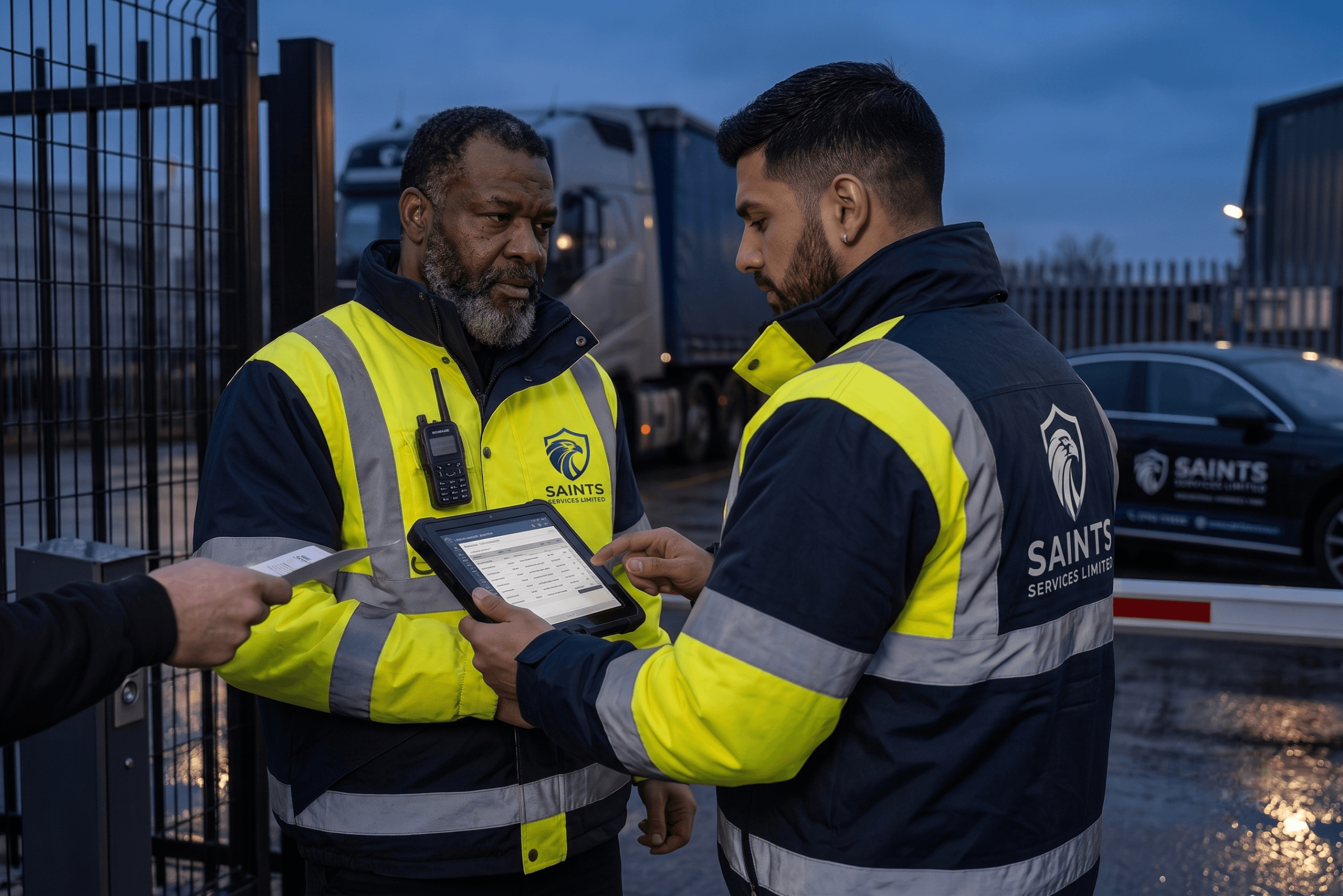
The primary site entrance is the single most critical security choke point. An SIA gatehouse officer controls all vehicle ingress and egress, ensuring that unauthorized vehicles cannot enter under the guise of delivery drivers.
Gatehouse guards verify driver credentials against daily delivery schedules, log vehicle registration numbers, check Risk Assessment and Method Statements (RAMS) documentation for contractors, issue visitor site passes, and perform physical searches of outgoing vans to eliminate insider theft.
5. Wireless Perimeter Towers vs. Static Guarding
While standalone solar-powered CCTV towers offer basic perimeter monitoring, automated cameras cannot intervene physically during an active breach.
Optimal site security combines electronic surveillance with a dedicated SIA static officer. While camera towers detect boundary incursions, the physical security guard provides an immediate on-site response—confronting trespassers, securing plant machinery, and managing police arrivals.
6. Procuring BS7858 Vetted Construction Guarding
Main contractors must verify that all security personnel deployed to site undergo compulsory BS7858 screening, which includes a 5-year employment history check, DBS criminal background check, and financial vetting.
To protect vacant commercial buildings or out-of-hours developments, explore our specialized 24/7 keyholding & mobile alarm response and door supervision solutions.
What credentials do construction site security guards require in the UK?
Construction security officers must hold a valid SIA Security Guarding or Door Supervision license, undergo BS7858 background vetting, and typically hold CSCS (Construction Skills Certification Scheme) cards for site access.
How do security guards prevent fuel theft on building sites?
Security guards conduct regular out-of-hours patrols around fuel bowsers, log all fuel dispenser usage during shifts, inspect tank anti-siphon locks, and monitor perimeter boundaries for unauthorized vehicle access.
How quickly can Saints Services Ltd deploy guards to a construction site?
Our 24/7 control room provides emergency deployment, placing SIA-licensed security officers on-site across London and nationwide within 2 hours of dispatch.
- Chartered Institute of Building (CIOB): Crime in the Construction Industry Report
- Plant Theft Scheme (CESAR): Official UK Plant Security Statistics
- Security Industry Authority (SIA): Private Security Industry Act 2001 Standards